














Blog
23.Dec.2025
Sustainability Spotlight: Upcycled Botanicals in Formulation
Introduction
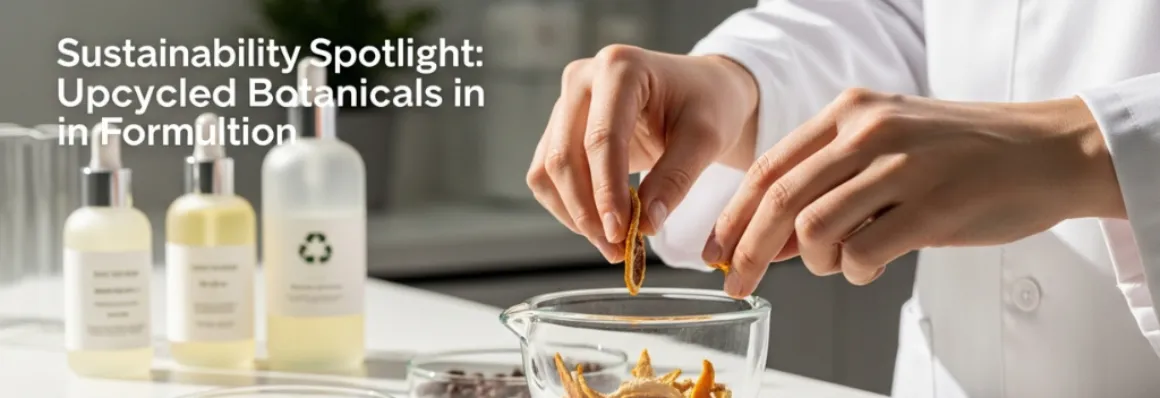
As the supplement industry faces pressure for greater transparency and environmental accountability, upcycled botanicals have emerged as a game-changing solution. Upcycling transforms agricultural and food by-products—often wasted—into potent, functional ingredients. Consumers and brands now seek supplements that improve wellness and the planet simultaneously, fueling a sector-wide movement toward more responsible sourcing and waste reduction.The Market Opportunity: Why Upcycled Ingredients Matter
The global botanical supplements market is projected to hit over $57B in 2025, fueled by consumer demand for natural, ethics-driven, and innovative products. Over 50% of new supplement launches now emphasize eco-friendly sourcing, plant-based actives, or upcycled/formulation stories on their labels and websites. For a new generation of buyers—especially Gen Z and Millennials—eco-claims aren’t a bonus, they’re a baseline.Environmental Impact
- Food and agricultural waste generates nearly 10% of global greenhouse gas emissions.
- Upcycling reduces reliance on new crops, slashes landfill waste, and maximizes the health-promoting power of every plant harvested.
- Bioactive-rich by-products like grape skins (from wine), citrus peels, olive pomace, and cherry pulp all retain valuable polyphenols, fiber, vitamins, and flavonoids—now captured for supplements instead of discarded.
Brand & Consumer Advantage
- “Upcycled” boasts high trust and loyalty value: 68% of wellness shoppers feel more positive about brands using upcycled actives.
- Upcycled ingredients deliver potent, traceable plant compounds—often verified with strong sustainability certifications.
- Brands gain a unique story: many highlight QR codes tracing ingredient origin, specific supply chain partners, or local farm rescue programs.
What Makes a Botanical “Upcycled”?
- Definition: Upcycled botanicals are natural ingredients sourced from side streams or waste of food, agriculture, or plant processing—repurposed for new use in supplements without compromising safety, nutrition, or efficacy.
- Examples: Grape seed/skin from winemaking, citrus peel from juice production, olive pomace from olive oil, spent coffee grounds, cherry pits and pulp, as well as misshapen or “ugly” fruit and vegetable fractions.
- Requirements: Must be traceable, safe, and processed without added synthetic chemicals; often supported by upcycled ingredient certifications.

Upcycled Botanicals in Action: Ingredient Spotlights
| Upcycled Ingredient | Source |
Main Actives | Key Benefits |
Notable Applications |
| Grape skin & seed extract | Wine/grape juice | Polyphenols, antioxidants | Circulation, skin, anti-aging | Powder capsules, gummies, beauty |
Citrus peel |
Juice industry | Flavonoids, fiber | Immunity, inflammation, digestion |
Effervescents, fiber blends |
| Cherry pulp & pits | Pie, juice, dried fruit | Anthocyanins, melatonin | Anti-inflammatory, sleep, neuroprotection | Sleep blends, recovery mixes |
| Olive pomace | Olive oil production | Polyphenols, vitamin E | Cardiometabolic, anti-inflammatory | Heart blends, longevity formulas |
| Spent coffee grounds | Coffee processing | Polyphenols, caffeine | Antioxidant, metabolism support | Greens powders, nootropic blends |
| Apple pomace | Juice, dried apple | Fiber, polyphenols | Gut health, cholesterol, satiety | Prebiotic blends, bars, shakes |
The Science: Why Upcycled Doesn’t Mean “Second Best”
- Research shows that by-products can retain or even concentrate valuable phytonutrients compared to primary plant parts—grape skins, for example, yield dense polyphenol content.
- Clinical and lab studies support the efficacy of upcycled actives for immune, digestive, antioxidant, and beauty benefits.
- Upcycling also fosters development of new delivery formats (e.g., powders, functional gummies, fortified foods) with a clear “planet positive” story.
Spotlight: How Leading Supplement Brands Use Upcycled Botanicals
- CherryForce™ Sleep Gummies: Uses upcycled cherry pulp and pit-derived melatonin precursors to improve bioactive content and sustainability messaging.
- EcoRescue™ Green Powder: Features a blend of upcycled citrus fiber, grape seed, and coffee extract; QR-coded packaging links buyers to farm origin for every lot.
- BeautyRenew Capsules: Utilizes upcycled wine grape skins, olive pomace, and apple fiber for antioxidant beauty, sold with a digital certificate of upcycled ingredient authenticity.
- Brand Best Practice: Transparent marketing—detailed partner and provenance storytelling—wins higher engagement and premium price positioning.champion-bio+1
Sourcing & Supply Chain: Best Practices for Eco-Friendly Formulation
- Traceable Partnerships: Work with vetted farms/wineries/juice processors using audited upcycling and processing protocols.
- Certifications: Look for third-party validation from organizations such as Upcycled Food Association, ECOCERT, USDA Organic, or Non-GMO Project.
- Quality Assurance: Require full batch testing for active compound content, heavy metals, pesticides, and compliance with local and export regulatory standards.
- Supplier Innovation: Seek partners investing in extraction/purification tech that maximize the value and safety of upcycled streams (enzyme extraction, micronization, supercritical CO2).
The Consumer Perspective: Myths and Motivations
Myth: Upcycled ingredients are less potent
Fact: By-products often retain equal or greater levels of desirable bioactives because they are concentrated in parts typically discarded (peels, skins, seeds).Myth: Upcycled means “unknown quality”
Fact: Top brands and suppliers document every stage, offer batch-level traceability and certification, and run comprehensive safety/identity tests.What buyers really want in 2025:
- Proven efficacy and safety
- Verified sustainability claims
- Unique stories (farm, region, supply chain rescue)
- Beautiful, informative packaging highlighting environmental impactchampion-bio+1
Challenges & Future Directions
- Supply consistency: Volume and quality can vary with harvest conditions and regional processing differences.
- Consumer education: Brands must educate on upcycling’s dual benefit: personal health + environmental stewardship.
- Investment in R&D: Ongoing research is needed to unlock new uses, improve extraction, and validate benefits for newer upcycled botanicals.
- Policy & regulation: Expect global authorities to issue new guidance on upcycled supply chains, food waste utilization, and sustainability substantiation for supplements by 2027.
Upcycled Botanicals and Circular Nutrition
- Circular economy: Upcycling fits perfectly—rescuing value from “waste,” supporting local farmers and processors, and creating new jobs in extraction and manufacturing.
- Zero-waste and net-positive ambitions: Brands strive not just to minimize harm but to give back—through soil improvement, methane reduction, and ecosystem benefit.
Frequently Asked Questions
Q: Are upcycled ingredients safe and regulated?A: Yes. Responsible brands and suppliers comply with all supplement and food safety standards. Look for batch lab tests, certification logos, and clear supplier transparency.
Q: Can upcycled botanicals match traditional actives in efficacy?
A: Absolutely. Multiple studies confirm comparable or even enhanced polyphenol and phytonutrient content, especially in grape skins, olive pomace, citrus peel, and cherry pulp.
Q: Is consumer demand high for upcycled botanicals?
A: Yes. In 2025, more than two-thirds of supplement buyers favor eco-friendly, plant-based, and circular economy claims; upcycled ingredients are cited as top buying motivators for age 25–45.
Conclusion
Upcycled botanicals are more than a sustainability trend—they are ushering in a new model for smarter, cleaner, and more ethical supplement formulation. Brands that prioritize upcycling not only reduce environmental impact but also differentiate with innovation, credibility, and true wellness value for modern consumers.Ready to innovate?
Connect with upcycled ingredient specialists, audit your supply chain, and bring eco-forward, potent plant actives into your next supplement launch.
References:
https://www.nutraingredients.com/Article/2025/08/28/turning-pulp-into-treasure-researchers-uncover-benefits-of-upcycling-cherry-waste/https://www.4ocean.com/blogs/industry-news/sustainability-in-the-supplement-what-consumers-need-to-know-industry
https://www.supplysidesj.com/natural-product-development/the-upside-of-upcycling
https://www.champion-bio.com/news-detail/gen-z-supplement-trends-2025/
https://www.researchandmarkets.com/report/botanical-supplement
https://www.champion-bio.com/news-detail/effervescent-supplements-2025-innovation-benefitss/
https://www.researchandmarkets.com/reports/5766727/botanical-supplements-market-report
https://insights.made-in-china.com/Global-Sourcing-Trends-and-Challenges-in-Dietary-Supplements-Industry_stYanZCvhJIk.html
https://www.sciencedirect.com/science/article/pii/S0048969724070293
https://www.vitafoodsinsights.com/sustainability/vitafoods-europe-2025-towards-a-sustainable-supplements-sector-e-mag-
https://ppl-ai-file-upload.s3.amazonaws.com/web/direct-files/attachments/images/94134522/455af747-7473-4af0-bd76-1c47e2f38a64/image.jpg?AWSAccessKeyId=ASIA2F3EMEYE6UYYUAC2&Signature=gwaxgdhn7GCbwAGbpXsrl5tWMZI%3D&x-amz-security-token=IQoJb3JpZ2luX2VjEDEaCXVzLWVhc3QtMSJIMEYCIQD6mionvH7kd0LKnPUL1P6bZ4pQZmaXL7%2BQcq%2Bgbf3qcwIhANgVNdCCOOi4anGtsRNgE5OjBU%2BfvjC2YC0vZgaLo7iTKvwECOn%2F%2F%2F%2F%2F%2F%2F%2F%2F%2FwEQARoMNjk5NzUzMzA5NzA1IgxibUkoek81m7MAdCIq0ARdr9YCZ4LqSrAfQnLiMuvwwFBmFt05s7EDxQmizb6HiAExpI5B%2B7kv%2F%2B%2FojHs7rhHjDNpi6jfHN7YN3enbFkg%2FQhdXUumX6GaduJD7lr6MM0eaqKzrfhEU7vXSRzqK2aqKhR724JzVKj8cOYedKXeShFBwtFORbbotu5jlg%2F6K1tGUwkkp1PQFDxTdoOideNwQ%2BGblZErMVp0UTa%2FZeCpCil1RF5SNkTV0dPltvdy053Mz9ikTJ%2B7jwdKWXBlCTS%2FZnl4%2F%2F%2BwNsxj4zdmXouBzo1lkfGFTCQEemlMmCqJFSr53AV9aCMiTU%2BTawsIQtv%2BDQ8He0ISKeC0FnJLpwxh78oMKQPTPUk4qDLs749OspXmGkX3BopZvVHv%2Fjgg9GTkDpACI8yNPjdkSlab0vK%2FmSK%2FG%2BgE4vYFEScDV53OGOuINblpYB94hnZny%2F8HlZ9Mhe1P%2FWvumzBFzkGmHOHivyekBvQHCczHWgZsaa5oiE4NAD4TEvj%2BG%2BU%2BTxQhzaGh00Ho2Xm6dEN3Nx8oGdYJeRUFm0S0d4ZsuM78KeDwyLBbWgO29pU4sCo38BZ458y7LlMczwBB%2BNGfVOngg%2FC5THeuLFUT1SOGBmZXQj%2BgnIupoHZKsyMGu%2BNRT4ibMZSsYak%2BA0ON3tPG183NJTq811wxrmS22oftzC%2BRi33hS611%2FyNlw%2FzvG2pYirekb9vWUyo8jvph1NYVckdE8IWxy0isG9RhJYLkkV0v7ciiFPhj%2BjyZeq1d5qq%2FuFraH%2FLmKpKiLXVB5MEXnfQn4wDRpMNS5jMgGOpcBwMlzy%2FNtjM04CRtI8m6cPbhZV8yzD03F0JKUxTSrKSyXXcXDbbslr%2FPG4w5vXPa7icBCP2j3R%2BJ7S9ml0d6mfdg4agDGHPLjKUPHMsrxuBLkJu43Ru0hm8M1rTX%2Bv2Vvb8h4v5WTQ8DNFBRqnQyW4ajCtNdftJemfJdAoEzJJAjNsj%2BTQSnjYyjmDTgKnbkPUk8c4dtHtA%3D%3D&Expires=1761813055
https://www.linkedin.com/pulse/botanical-supplements-market-sustainability-regional-rgaxe
https://insights.figlobal.com/fruit-vegetables-nuts-seeds/botanical-ingredients-exploring-future-scenarios
https://www.mynaturalorigins.com/en/blog/botanicals-the-future-of-food-supplements
https://aurinutra.com/manufacturing-packaging-sustainable-packaging-solutions-for-supplements/
https://www.mordorintelligence.com/industry-reports/botanicals-market
https://arjunanatural.com/sustainable-nutraceuticals-eco-friendly-trends-2025/
https://pmc.ncbi.nlm.nih.gov/articles/PMC6222869/
https://vitaquest.com/exploring-the-trends-for-2025-in-the-dietary-supplement-market/
https://www.readability.co.uk/blog/eco-friendly-protein-powder-packaging-trends/
https://www.dsm-firmenich.com/en/businesses/health-nutrition-care/news/talking-nutrition/a-new-age-of-nature-blossoms.html