














Blog
19.Mar.2026
Magnesium Glycinate vs Other Magnesium Forms: How Brands Should Choose the Right One
Why Magnesium Form Matters More Than Most People Realize
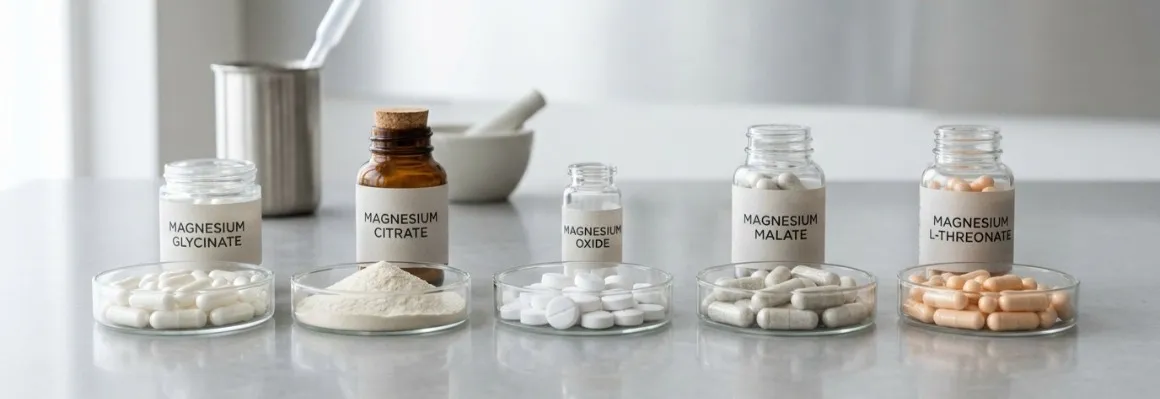
Magnesium is one of the most used ingredients in modern supplements—for sleep, stress, muscle recovery, heart health, and metabolic support. But “magnesium” on a label can mean very different things. Oxide, citrate, glycinate, malate, threonate, and bisglycinate all behave differently in the body and in your formula, with big implications for bioavailability, GI tolerance, taste, capsule size, and cost.For brand owners, choosing the wrong form can mean customer complaints, poor results, or a product that’s too expensive—or too weak—to succeed. This guide explains how magnesium glycinate compares with other forms and how to pick the right one for your next sleep, stress, or muscle‑support launch.
A Quick Primer: Elemental Magnesium vs Total Salt
Before comparing forms, it’s crucial to understand elemental magnesium.- Each magnesium compound is a combination of magnesium plus a “partner” molecule (oxide, citrate, glycine, etc.).
- The percentage of elemental magnesium by weight varies widely. For example:
- Magnesium oxide is about 60% elemental magnesium.
- Magnesium citrate is roughly 11–16%.
- Magnesium glycinate is around 14%, depending on the exact salt and hydration state.
This means a 1,000 mg dose of magnesium oxide delivers ~600 mg elemental Mg, while 1,000 mg of magnesium glycinate delivers closer to 140 mg. Labels should always declare elemental magnesium, not just the salt weight.
Magnesium Glycinate: What It Is and Why It’s Popular
Magnesium glycinate (often supplied as magnesium bisglycinate) is a chelated form where magnesium is bound to the amino acid glycine. This structure appears to:- Improve GI tolerance, with fewer reports of loose stools compared with more osmotic forms like magnesium oxide or citrate.
- Offer good bioavailability, as glycine is efficiently transported across the intestinal wall.
- Provide a calming co‑factor, since glycine itself can act as an inhibitory neurotransmitter and support sleep quality in some studies.
Comparing Major Magnesium Forms
1. Magnesium Oxide
Pros:- Very high elemental magnesium content (~60%).
- Cheap and widely available.
- Suitable when cost per mg is the main constraint.
- Poor bioavailability; several studies show limited absorption, with much of the dose passing through the gut.
- Strong laxative effect at higher doses due to unabsorbed ions drawing water into the intestine.
- Occasional constipation relief products where laxation is a feature, not a bug.
- Budget multi‑vitamins where magnesium dose is low and primarily for label completeness, not therapeutic effect.
2. Magnesium Citrate
Pros:- Better absorption than oxide in most studies.
- Reasonable cost and good solubility in water, making it suitable for powders and effervescent products.
Cons:
- Osmotic effect can still cause loose stools at higher doses—problematic in sleep or stress products.
- Citrate contributes tart taste and acidity, which can limit flavor options or cause enamel concerns if sipped frequently.
- Digestive and occasional laxative formulas where a gentle stool‑softening effect is acceptable.
- Drink mixes where a citrus profile and mild laxation are desired.
3. Magnesium Glycinate / Bisglycinate
Pros:- High tolerability; much lower risk of diarrhea at equivalent magnesium doses vs oxide or citrate.
- Solid absorption profile thanks to chelation.
- Synergy with glycine for calming, sleep support, and muscle relaxation.
- Neutral taste profile in many matrixes, easier to flavor than citrate.
Cons:
- Lower elemental magnesium per gram than oxide → larger capsule sizes or more capsules to hit higher doses.
- More expensive raw material.
Best use cases:
- Sleep, stress, and mood formulas where GI comfort is critical.
- Evening magnesium blends for athletes and office workers.
- Long‑term daily use products for people with mild deficiency or higher needs.
4. Magnesium Malate
Pros:- Malic acid participates in energy production (Krebs cycle), leading to a positioning around energy and muscle comfort.
- Good absorption and moderate GI tolerance.
Cons:
- Slightly tart taste and higher cost than oxide/citrate.
Best use cases:
- Daytime “energy and muscle comfort” formulas, especially for active consumers or those with muscle aches.
- Combinations with B‑complex vitamins and CoQ10.
5. Magnesium L‑Threonate
Pros:- Patented form marketed for brain health based on preclinical and early clinical research suggesting better penetration into cerebrospinal fluid.
- Strong marketing story around memory and cognitive support.[meetglimpse]
Cons:
- Very low elemental magnesium per gram; requires multiple capsules to reach even 100 mg Mg.
- Expensive, making it difficult to include at meaningful doses in low‑price products.
- Long‑term human outcome data still limited.
Best use cases:
- Premium cognitive formulas aimed at biohackers or older adults.
- Stacks including DHA, phosphatidylserine, and nootropics where price points can support the ingredient.
6. Magnesium Taurate, Orotate, and Others
Specialty forms like magnesium taurate or orotate target niche benefits (cardiovascular, mitochondrial), but data are more limited and costs higher.These may fit very targeted products but aren’t usually first‑choice forms for general sleep/stress or simple daily magnesium supplementation.
Matching Magnesium Forms to Product Goals
Sleep‑Focused Product
Primary goals: reduce nighttime restlessness, support sleep latency and quality, minimize GI upset.Best fit:
- Magnesium glycinate/bisglycinate as the main form (100–200 mg elemental per serving).
- Optionally blended with a small amount of magnesium malate or citrate if you want mild looseness in users who tend toward constipation—clearly communicated.
Add‑on actives might include:
- L‑theanine
- Glycine (beyond what is bound to magnesium)
- Low‑dose melatonin, GABA, or herbal extracts (passionflower, lemon balm)
Stress and Mood Formula
Primary goals: support calm, reduce tension, be suitable for daytime use without sedation or urgent bathroom trips.Best fit: Magnesium glycinate or glycinate + malate blend (150–250 mg elemental across 2–3 daily servings).
Positioning:
- “Gentle on digestion”
- Pairs well with adaptogens like ashwagandha, rhodiola, or L‑tyrosine depending on the stress profile.
Muscle Recovery and Active Lifestyle
Primary goals: support muscle relaxation, cramp reduction, and energy metabolism for athletes or active consumers.Best fit: Mixed approach: magnesium glycinate for tolerance plus magnesium malate or citrate for energy and electrolyte balance.
Formulation example per serving:
- 150 mg Mg as glycinate
- 100 mg Mg as malate
- Electrolytes (sodium, potassium) and small amounts of tart cherry or turmeric for recovery positioning.
General Health / Multivitamin
Primary goals: cost‑effective baseline magnesium support in a multi‑nutrient product.Best fit: A blend of citrate + glycinate or malate + glycinate, balancing cost and absorption.
Pure oxide may look attractive on spreadsheets but often fails to deliver meaningful physiological benefits—and can drive complaints. A partial upgrade to better‑absorbed forms improves real‑world outcomes and reviews.
Practical Manufacturing Considerations
Capsule Size and Count
Because magnesium glycinate has lower elemental content per gram, hitting common “therapeutic” ranges (200–400 mg/day) means:- 2–4 standard size 0 or 00 capsules if using glycinate alone.
- Fewer capsules if combining glycinate with higher‑density forms like citrate or malate.
Taste and Solubility in Powders
- Citrate and malate dissolve well and provide a pleasant tart backbone for flavored drink mixes.
- Glycinate has more neutral taste but can create slight bitterness or “mineral” notes at higher concentrations—careful flavor balancing is required.
- Oxide is poorly soluble and can create sandy textures; best avoided in drinks.
Stability and Interactions
Magnesium salts can interact with:- Acidic flavors and vitamin C, altering pH and solubility.
- Phytates or fiber blends, which may slightly affect absorption.
Cost vs Value: Helping Clients Decide
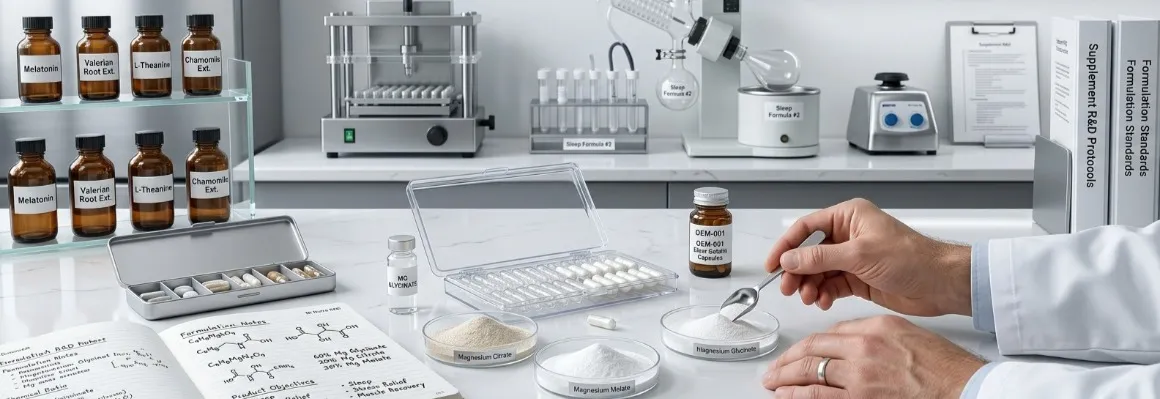
From the OEM/manufacturer side, guiding clients through magnesium choice often involves these steps:- Clarify the primary benefit: sleep, stress, muscle, heart, brain, or simple daily support.
- Define target dose and price point: Are we aiming for 100 mg/day at entry‑level pricing or 300–400 mg/day in a premium product?
- Rank constraints: Is GI tolerance more important than capsule count? Is this a drink, capsule, or gummy?
- Model cost per effective dose, not per raw‑material kilo. Oxide may be cheap per kg but ineffective or poorly tolerated per mg delivered.
- Prototype two or three options: For example:
- 100% glycinate (premium, highest tolerance)
- Glycinate + malate (mid‑price, broader positioning)
- Citrate + small glycinate (value tier with improved absorption vs oxide).
Common Mistakes Brands Make With Magnesium
- Listing “magnesium” without specifying the form. This undermines transparency and SEO—consumers now search specifically for “magnesium glycinate” or “magnesium citrate.”
- Using oxide as the primary form in sleep or stress products. Cheap short‑term, expensive long‑term due to weak results and poor reviews.
- Under‑dosing to keep capsule count low. If your “sleep magnesium” provides only 50–75 mg elemental per night, the effect will be subtle at best.
- Ignoring GI tolerance. Even a scientifically great formula will fail if customers are running to the bathroom.
- Not adjusting for diet. Athletes with high sweat losses, older adults, and those on diuretics often need higher doses; vegans and high‑stress individuals may benefit from specific forms.
Conclusion: Choosing the Right Magnesium Is a Strategic Decision
“Magnesium” is not one ingredient. It’s a family of salts with very different characteristics—and your choice says a lot about your brand’s priorities.- For sleep and stress, magnesium glycinate is often the best default: well‑absorbed, gentle on digestion, and synergistic with calming stacks.
- For muscle recovery and hydration, combining glycinate with citrate or malate balances tolerance, taste, and cost.
- For general health and cost‑sensitive multis, modest upgrades from oxide to blended forms can dramatically improve real‑world results.