














Blog
12.Feb.2026
Kombucha Powder vs Ready‑to‑Drink Kombucha: Benefits, Uses, and How It’s Made
Why Kombucha Powder Is Taking Over the Functional Drink Aisle
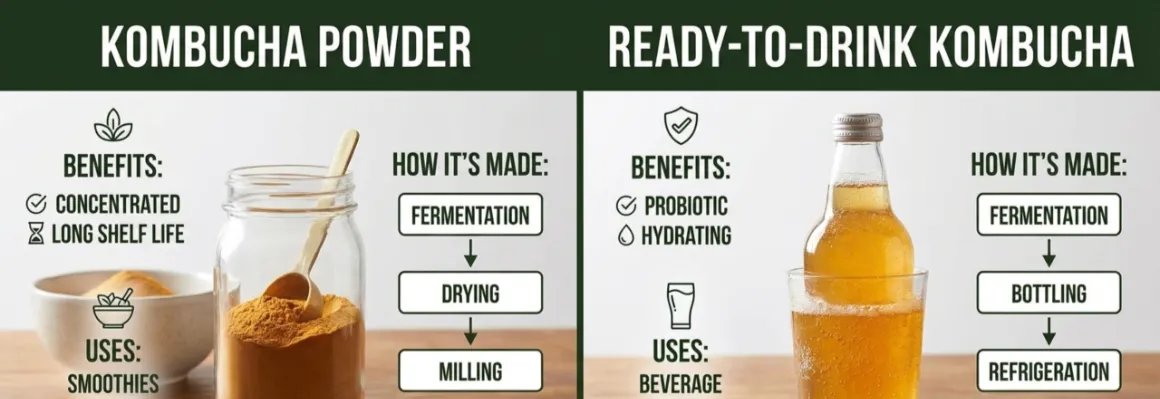
Kombucha used to mean one thing: a fizzy, tangy bottle pulled from the fridge. Today, formulators and health‑conscious consumers are reaching for something different—kombucha powder. This dry, shelf‑stable format can be stirred into water, blended into greens powders, used in gummies, or built into ready‑to‑mix sticks and sachets.Understanding how real kombucha powder is made, how it compares to ready‑to‑drink (RTD) kombucha, and how to choose a quality product is essential if you’re a brand owner or a serious kombucha fan.
This article explains the full manufacturing process—from fermentation to drying—plus the science, benefits, and trade‑offs between kombucha powder and bottled kombucha.
What Exactly Is Kombucha Powder?
At its core, kombucha is fermented tea. Sweetened tea is inoculated with a SCOBY (symbiotic culture of bacteria and yeast). Over several days, microbes transform sugars into organic acids, carbon dioxide, trace ethanol, and flavor compounds, while preserving tea polyphenols and adding new metabolites.Kombucha powder is this same fermented beverage that has been concentrated and dried into a stable powder. A well‑made powder should retain:
- Organic acids (like acetic, gluconic, and glucuronic acids)
- Tea polyphenols and catechins
- Fermentation flavor notes and aroma
- Potentially, viable microorganisms (if the product is designed and stored correctly)
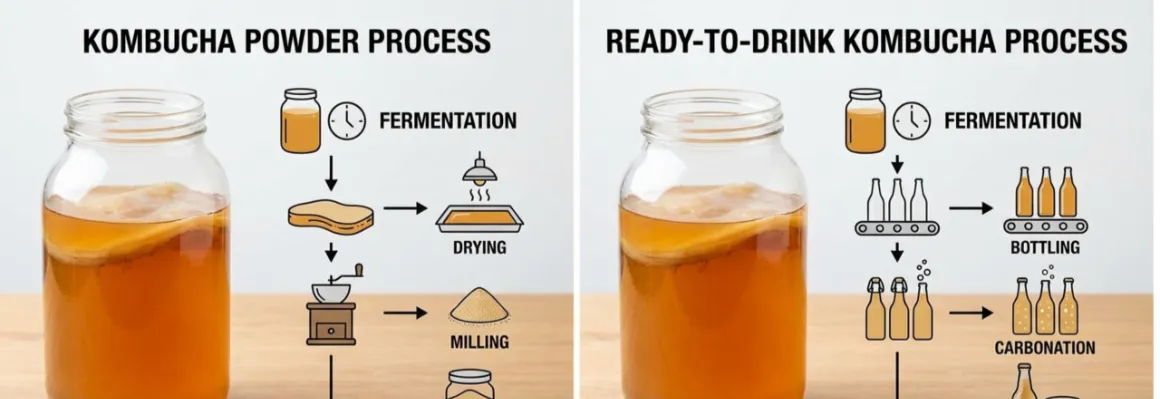
Step‑by‑Step: How Real Kombucha Powder Is Made
1. Brewing the Source Kombucha
The process begins with traditional kombucha brewing:- Tea extraction – Typically black, green, or a blend of teas are steeped in hot water to extract flavor and polyphenols.
- Sweetening – Cane sugar or other fermentable carbohydrates are added to feed the SCOBY.
- Inoculation – The SCOBY plus starter liquid from a previous batch are added under sanitary conditions.
- Fermentation – The brew ferments in temperature‑controlled vessels. pH, sugar level, and acidity are monitored carefully until the target profile is reached.
2. Standardizing the Liquid
Before drying, the kombucha is standardized:- Insoluble particles and SCOBY fragments are removed or reduced by filtration.
- Brix (sugar/solids), pH, and acidity are checked to ensure consistency from batch to batch.
- In some cases, the kombucha is concentrated under gentle vacuum to reduce water content before drying.
3. Choosing a Drying Technology
Two main methods are used to turn kombucha into powder:Spray Drying
- The liquid is atomized into tiny droplets inside a spray dryer.
- Hot, filtered air evaporates water almost instantly.
- Droplets dry as they fall, turning into a fine powder collected at the bottom of the chamber.
- Use relatively low inlet temperatures and short residence times.
- Add carrier solids such as maltodextrin, gum acacia, or tapioca solids to improve stability and flow.
Freeze Drying (Lyophilization)
- The kombucha is frozen and then placed under vacuum.
- Ice sublimates directly into vapor, leaving a porous, dry matrix.
- Much more expensive
- Slower and less suitable for very large volumes
4. Protecting Probiotic and Postbiotic Components
Not all kombucha powders contain live cultures—nor do they need to. There are three main approaches:- Live‑culture kombucha powder – Produced with careful low‑heat processes, protective carriers, and cold‑chain storage.
- Postbiotic kombucha powder – Microorganisms are intentionally inactivated during drying, but their metabolites (organic acids, peptides, cell wall fragments) are retained, which can still support gut and immune effects.
- Hybrid products – Kombucha powder used as a flavor/acid base combined with separately added probiotic strains that are more robust and better characterized.
5. Blending, Standardizing, and Testing the Powder
After drying, the raw kombucha powder is:- Sieved and milled to achieve the desired particle size.
- Standardized with additional carriers, flavors, or functional ingredients as needed.
Tested for:
- Moisture and water activity (to ensure shelf stability)
- Microbial counts and absence of pathogens
- Organic acid profile and polyphenol content
- Sensory attributes (color, aroma, taste)
Kombucha Powder vs Ready‑to‑Drink Kombucha
Convenience and Versatility
Kombucha powder:
- Lightweight and shelf‑stable—ideal for e‑commerce, travel, and international shipping.
- Easily dosed into stick packs, tubs, capsules, or instant beverage sachets.
- Simple for consumers to add to water, smoothies, or recipes.
RTD kombucha:
- Requires refrigeration (for most products) and glass or PET bottles.
- Heavier and more fragile, increasing shipping cost and carbon footprint.
Sugar and Calorie Control
RTD kombucha often contains residual sugar to maintain flavor and fermentation balance. Even “low‑sugar” options can deliver several grams per serving.With kombucha powder, formulators can:
- Dial in sweetness using stevia, monk fruit, allulose, or very small amounts of sugar.
- Offer near‑zero‑calorie kombucha drink mixes while still providing acids and tea polyphenols.
- This sugar control is a major advantage for weight‑conscious and diabetic consumers.
Shelf Life and Stability
Bottled kombucha presents ongoing stability challenges:- Live cultures keep fermenting slowly in the bottle, potentially building CO₂ and pressure.
- Flavors can change over time, and refrigeration is almost always required.
- Achieve 2–3‑year shelf lives at room temperature if moisture and oxygen are controlled.
- Avoid pressure issues entirely.
- Are easier to store for retailers and distributors.
Microbial Viability
A key perception difference is live microbes:- Many RTD kombuchas contain high counts of yeast and bacteria at bottling.
- Drying and storage can significantly reduce viability in powders, unless the process and formulation are optimized.
- If your kombucha powder does not maintain robust, measured CFUs until expiry, focus on postbiotic and organic acid benefits instead of promising generic “billions of probiotics.”
- Alternatively, pair kombucha powder with well‑studied, shelf‑stable probiotic strains added after drying, and verify CFUs via third‑party labs.
Evidence‑Based Benefits of Kombucha Powder
Research on kombucha itself—especially in humans—is still emerging, but the key components in both liquid and powder have plausible mechanisms:- Organic acids (acetic, gluconic, glucuronic) can support digestive comfort and may influence the gut environment.
- Tea polyphenols and catechins offer antioxidant support and may contribute to cardiometabolic health.
- Postbiotic metabolites from fermentation (such as peptides and cell‑wall fragments) can modulate immune function and gut signaling in early studies.
- A concentrated source of fermented tea compounds and organic acids.
- A flavor and function base for broader gut‑health or wellness formulations.
How Brands Use Kombucha Powder in Formulations
1. Ready‑to‑Mix (RTM) Drink Sticks and Sachets
Kombucha powder is ideal for single‑serve sachets:- Consumers tear, pour into water, stir, and drink.
- Formulators can add electrolytes, vitamin C, adaptogens, or probiotics for multifunctional hydration and gut‑support drinks.
- Flavor systems (citrus, berry, ginger, tropical) build on kombucha’s natural tartness.
2. Greens and Superfood Powders
Many “greens” or superfood blends now include kombucha powder as:- A flavor enhancer that adds tang and depth.
- A fermented component that differentiates from plain vegetable powders.
3. Gummies and Chewables
Gummy formulators use kombucha powder to create:- Novel “fermented fruit” flavor profiles.
- Digestive‑support SKUs where kombucha powder is combined with inulin, pectin, and specific probiotic strains.
4. Functional Shots and RTD Hybrids
Some brands rehydrate kombucha powder into:- 2–3‑oz shots blended with ginger, turmeric, or other intense botanicals.
- Low‑sugar spritzers or canned beverages using powder as a concentrate instead of full fermentation in the final pack.
5. Capsules and Tablets
Where a purely postbiotic or organic‑acid benefit is desired, kombucha powder can be:- Compacted into tablets or filled into capsules alone or with other botanicals.
- Since carbonation and flavor are absent, this is better positioned as a digestive or wellness support supplement rather than a “drink experience.”
Practical Formulation Tips for Stable, Tasty Kombucha Powder Products
- Control Acidity: Too high an acid load makes powders unpleasant and can interact with other actives. Formulators often blend with buffering agents or use partial neutralization.
- Choose the Right Carrier: Maltodextrin is common, but tapioca solids, gum acacia, or fibers can support cleaner labels and improved mouthfeel.
- Manage Hygroscopicity: Some powders readily absorb moisture from air, leading to clumping. Low water activity, anti‑caking agents, and moisture‑barrier packaging are key.
- Build Flavors Around Kombucha, Not Against It: Embrace its natural tang with fruit and spice notes (lemon‑ginger, berry‑hibiscus) instead of trying to hide it completely.
- Test at Real‑World Concentrations: Sensory and stability trials should use the same dose consumers will mix into water or food—not just lab dilutions.
How to Evaluate a Kombucha Powder Supplier
When you assess a kombucha powder ingredient or finished product manufacturer, ask for:- Full product specification – including organic acid levels, carriers, moisture, and microbial limits.
- Description of the fermentation and drying method – and whether cultures are intended to remain viable.
- Stability data – showing acid profile, sensory attributes, and CFUs (if claimed) over time and at different storage conditions.
- Third‑party test results – verifying absence of pathogens, heavy metals, and undeclared ingredients.
- Label guidance – recommended serving size, pH when reconstituted, allergen and dietary information.
Choosing Between Kombucha Powder and RTD for Your Brand
For consumer‑facing decisions:- Choose RTD kombucha if you want:
- A classic, ready‑to‑drink experience with immediate sensory impact
- Distribution in cafes, refrigerated retail, or on‑premise locations
- Choose kombucha powder if you want:
- E‑commerce, global shipping, or long shelf life without refrigeration
- Flexible product concepts (sticks, blends, gummies, capsules)
- Sugar control and macro‑friendly nutrition profiles
For B2B or brand‑owner decisions:
- Powder centralizes fermentation expertise in one location, then allows you to scale a diverse portfolio of kombucha‑inspired products worldwide.
- It also simplifies inventory, as a single powder can be reworked into multiple SKUs (hydration mix, greens blend, gummies) instead of managing multiple liquid lines.
Conclusion: Where Kombucha Powder Fits in the Future of Functional Beverages
Kombucha powder is no longer a niche curiosity—it is a foundational ingredient for the next generation of gut‑health and functional drink products. By understanding how it is fermented, dried, standardized, and formulated, brand owners and consumers can cut through hype and recognize true quality.For brands, the choice is strategic: RTD kombucha shines in refrigerated beverage aisles, while kombucha powder unlocks global e‑commerce, multi‑format innovation, and better control over sugar, cost, and stability.
Partner with us
If you are planning your next functional drink or supplement line, considering kombucha powder as a core building block can give you both fermented credibility and the flexibility modern products demand.