














Blog
04.Mar.2026
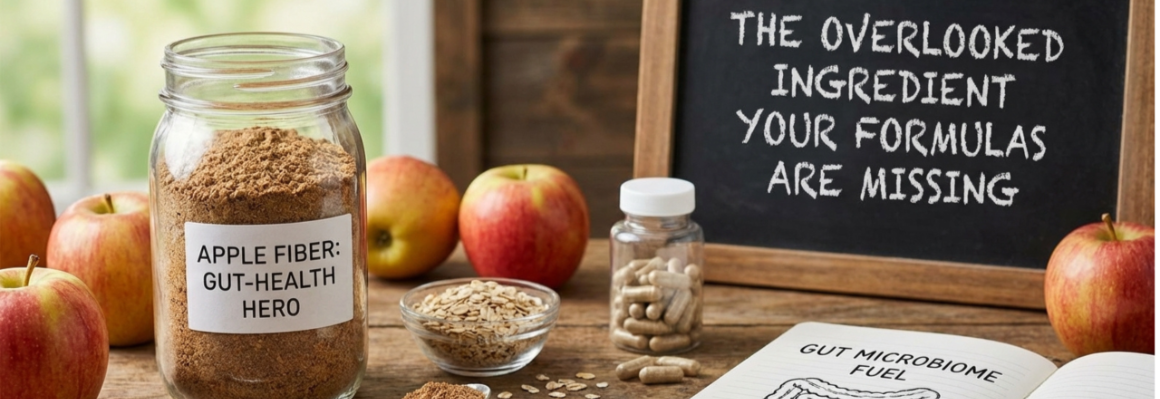
Apple Fiber: The Overlooked Gut‑Health Ingredient Your Formulas Are Missing
Why Apple Fiber Deserves a Starring Role in Modern Gut‑Health Formulas
Most brands lean on trendy ingredients—probiotics, prebiotic blends, exotic botanicals—when formulating for gut health. Yet one of the most versatile, evidence‑aligned, and formulation‑friendly options is hiding in plain sight: apple fiber.Apple fiber offers a unique mix of soluble and insoluble fractions, gentle prebiotic effects, appealing label language (“from apples”), and strong compatibility with powders, bars, gummies, and capsules. Done right, it supports digestive regularity, satiety, and metabolic health while also enabling upcycled and sustainability stories.
This article explains the nutrition science behind apple fiber, how it behaves in real products, dose ranges, and practical formulation tips to capture maximum value.
What Is Apple Fiber, Really?
Apple fiber is typically produced from apple pomace—the pulp, skins, and cores left over after juice or cider production. Rather than sending this nutrient‑rich by‑product to waste, manufacturers:- Dry the pomace under controlled conditions.
- Mill and sift it to a consistent particle size.
- Optionally standardize the product to defined levels of total dietary fiber or specific components (like pectin).
- Insoluble fiber (cellulose, hemicellulose, lignin, skin fragments)
- Soluble fiber (mainly pectin)
- Small amounts of polyphenols and residual micronutrients
Soluble vs Insoluble: What Makes Apple Fiber Special?
Insoluble Fraction
Insoluble fiber acts primarily as a bulking agent in the gut:- Adds volume to stool
- Helps normalize transit time
- Supports sensations of fullness
Soluble Fraction (Pectin‑Rich)
Apple’s soluble fraction—chiefly pectin—behaves differently:
- Forms viscous gels when hydrated
- Slows gastric emptying and glucose absorption
- Is fermented by colonic bacteria into short‑chain fatty acids (SCFAs) like acetate and butyrate
Why the Blend Matters
Many fibers are predominantly one type or the other. Apple fiber’s mixed profile gives formulators:- Physical bulking (insoluble) and
- Fermentable, microbiome‑active components (soluble/pectin)
Evidence‑Aligned Benefits of Apple Fiber
1. Bowel Regularity and Stool Quality
Trials with pectin‑rich fruit fibers indicate:- Improved stool form and frequency in individuals with low baseline fiber intake
- Reduced incidence of both hard and excessively loose stools when adequate fluid is consumed
2. Prebiotic and Microbiome Support
While not all apple fibers have formal “prebiotic” approvals, in vitro and animal studies show:- Selective fermentation by beneficial genera such as Bifidobacterium and Lactobacillus
- Increased production of SCFAs associated with anti‑inflammatory effects
3. Satiety and Weight‑Management Support
Viscous fibers like pectin:- Delay gastric emptying
- Modulate hunger hormones
- Blunt post‑prandial glucose spikes
- Meal‑replacement shakes
- High‑protein bars
- “Smart snacking” concepts for weight management
4. Cardiometabolic Markers
Soluble fibers are widely recognized for:- Supporting healthy blood cholesterol levels
- Smoothing post‑meal glycemic responses
5. Gentle, Family‑Friendly Digestive Support
Importantly, apple fiber is generally well tolerated when introduced gradually with sufficient fluid. Its apple origin reassures parents and older adults who may be wary of harsh laxatives or “chemical‑sounding” prebiotics.Dose Ranges: How Much Apple Fiber Makes Sense?
Real‑world product development must balance efficacy, sensory experience, and GI tolerance.Daily Fiber Targets
Most health authorities recommend: 25–38 g/day total dietary fiber for adults, depending on age and sexHowever, real intake is often 10–15 g below these targets. Supplements rarely attempt to cover the entire gap in one serving; instead, they aim to:
- Provide 3–8 g additional fiber per serving in shakes and bars
- Provide 1.5–4 g in capsules, gummies, or mixed nutrient formulas
Typical Inclusion Levels for Apple Fiber
- Powdered shakes / RTM drinks: 2–6 g per serving
- Bars and baked snacks: 3–8 g per piece (often in combination with other fibers)
- Gummies / chews: 1–3 g per serving total fiber, with apple contributing part of the blend
- Capsules / tablets: 500–1,000 mg per capsule, usually taken 2–4 times daily
How Apple Fiber Behaves in Real Products
Hydration and Viscosity
Apple fiber hydrates readily, particularly the pectin fraction, which:- Thickens liquids and forms gels
- Contributes to a creamy mouthfeel in shakes
- Can increase chews’ and gummies’ chewiness
Mouthfeel and Grittiness
Particle size has a major impact on consumer perception:- Coarse apple fiber can add perceivable graininess or “bits” to drinks—sometimes desirable in rustic smoothies, but unwelcome in clear beverages.
- Fine‑milled grades disperse more uniformly and feel smoother, especially in ready‑to‑mix powders and tablets.
Water‑Binding and Freshness in Bars
In snack bars and baked goods, apple fiber:- Binds water and contributes to softness over shelf life
- Reduces syneresis (liquid weeping) from fruit inclusions
- Helps maintain structure when sugar or fat is reduced
Flavor Impact
Apple fiber has:- Mild apple aroma
- Slight, natural sweetness (depending on residual sugars)
- Neutral to slightly fruity flavor

Formulation Strategies Using Apple Fiber
1. Gut‑Health Drink Mix
Concept: A once‑daily drink mix that supports regularity and microbiome health.Potential build:
- Apple fiber (fine grade) – 3 g
- Inulin or resistant dextrin – 3 g
- Vitamin C – 80 mg
- Zinc – 5–10 mg
- Natural apple‑cinnamon flavor, stevia/monk fruit sweetening
- Ensure good dispersion in cold water; small amounts of silicon dioxide can improve flow.
- Consider adding citric or malic acid to brighten flavor, but avoid pH so low that fiber gels excessively.
- Run viscosity tests at 0, 15, and 30 minutes post‑mix to ensure drinkable texture through the consumer’s real use window.
2. High‑Fiber Satiety Bar
Concept: A snack bar positioned for mid‑morning hunger control.Potential build:
- Oats, nuts, seed mix
- Apple fiber – 4–6 g per bar
- Chicory root fiber or soluble corn fiber – 4–6 g
- Whey or plant protein – 10–15 g
- Dried apple pieces and cinnamon
- Adjust binding syrups (date paste, rice syrup, etc.) to account for apple fiber’s water binding.
- Perform texture testing after production and at multiple shelf‑life points to avoid hardening.
- Highlight “fiber from real apples” and “upcycled apple pomace” on pack for sustainability storytelling.
3. Children’s Digestive Gummies
Concept: A kid‑friendly daily fiber gummy supporting regularity.Potential build:
- Pectin‑based gelling
- Apple fiber – 1–2 g per 2–3 gummies
- Small amounts of inulin or FOS
- Natural apple and berry flavors, no artificial colors
- Apple fiber integrates nicely into a pectin matrix, but solids loading must be balanced to maintain clarity and chewiness.
- Water activity and pH must be targeted carefully (e.g., aw < 0.6, pH ~3.2–3.6) to ensure microbial safety.
- Include clear dosage guidance for parents and emphasize the importance of water intake.
4. Capsule‑Based Gentle Regularity Support
Concept: For users who dislike flavored powders but want a natural, non‑stimulant option.Potential build:
- Apple fiber – 700 mg per capsule
- Prune extract – 100 mg
- Magnesium citrate – low dose for gentle osmotic effect
- Use HPMC or other plant‑based capsules if acidity or moisture are a concern.
- Conduct disintegration tests to confirm capsules release within appropriate time frames.
- Provide titration instructions (e.g., start with 2 capsules at night, increase to 3–4 as needed).
Apple Fiber and Sustainability: The Upcycled Advantage
Apple processing generates large volumes of pomace that historically ended up as low‑value animal feed or landfill. Using this stream for apple fiber:- Cuts food waste
- Adds economic value for juice and cider producers
- Supports brand sustainability messaging
- Documented traceability back to specific orchards or juice plants
- Certifications or participation in upcycled ingredient programs
- Data on environmental impact reduction (e.g., CO₂ savings or waste diversion metrics)
Regulatory and Labeling Considerations
- In most regions, apple fiber is classified as a conventional food ingredient or dietary fiber, not a novel food.
- Labeling terms can include “apple fiber,” “apple pomace powder,” or “dried apple fiber.”
- You can typically highlight “contains X g of fiber from apple per serving”, and where allowed, structure‑function statements like “supports digestive regularity” or “helps you feel fuller for longer,” provided they are truthful and not disease claims.
- If used to increase total fiber significantly, ensure Nutrition Facts or Supplement Facts panels reflect accurate fiber values based on laboratory analysis, not just spec sheets.
Practical Tips for Working With Apple Fiber
- Specify particle size and fiber content with your supplier. This prevents surprises in texture or label values.
- Pilot small batches at different inclusion rates. Sensory acceptance often has a non‑linear relationship with fiber level.
- Hydration testing is essential. Run rheology tests in liquids and water‑activity measurements in solids.
- Combine with complementary fibers. Blends (e.g., apple + inulin + resistant starch) can balance fermentability, tolerance, and texture.
- Educate consumers. Simple instructions—“Increase gradually and drink plenty of water”—go a long way toward avoiding GI complaints.
Why Your Next Gut‑Health Launch Should Start With Apple Fiber
Apple fiber offers a rare combination of:- Scientifically plausible benefits for gut function, satiety, and metabolic health
- A friendly, food‑based image that resonates with parents, older adults, and clean‑label shoppers
- Strong functional performance in drinks, bars, gummies, and capsules
- Sustainability credentials through upcycling
If you are planning your next digestive or metabolic formula, starting with apple fiber gives you a solid, consumer‑trusted foundation that is easy to explain, easy to formulate, and easy to love.
Partner With Us
If you are planning your next digestive or metabolic formula, starting with apple fiber gives you a solid, consumer‑trusted foundation that is easy to explain, easy to formulate, and easy to love.