














Blog
07.Mar.2026
From Gut Health to Satiety: How Brands Are Using Apple Fiber in Modern Formulations
Why Apple Fiber Is Quietly Powering the Next Wave of Gut‑Health Products
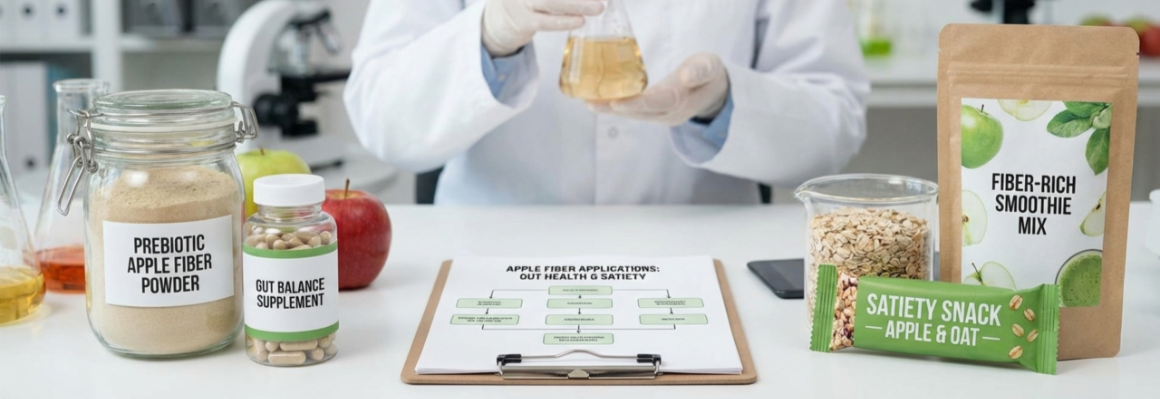
Apple fiber rarely gets the same spotlight as trendy probiotics or exotic botanicals, yet it appears in an increasing number of gut‑health, weight‑management, and “better‑for‑you” products. Brands use it because it delivers science‑aligned benefits, clean‑label appeal, and strong performance across capsules, powders, bars, and gummies.This article combines nutrition science with real‑world product‑development experience to show how companies are using apple fiber benefits across categories—and how you can do the same.
The Science Behind Apple Fiber Benefits
Mixed Soluble and Insoluble Fiber
Apple fiber is derived from dried and milled apple pomace (skins, pulp, cores) and typically provides both:- Insoluble fiber – cellulose, hemicellulose, and lignin that add bulk to stool and support regularity.
- Soluble fiber (pectin‑rich) – forms viscous gels, slows gastric emptying, and is fermented by gut bacteria into short‑chain fatty acids (SCFAs).
Gut Microbiome and SCFA Production
The pectin component is selectively fermented by beneficial bacteria, which produce SCFAs such as acetate, propionate, and butyrate. These metabolites:- Serve as fuel for colon cells
- Help maintain gut barrier integrity
- Influence inflammatory pathways and appetite regulation
Satiety, Glycemic Control, and Cholesterol
Viscous fibers slow the movement of food from the stomach to the small intestine and reduce glucose absorption speed. Studies with pectin‑rich fibers show:- Increased feelings of fullness after meals
- Reduced subsequent energy intake
- Modest improvements in LDL cholesterol and post‑prandial glucose when used consistently
Application Area 1: Gut‑Health Powders and Drink Mixes
Once‑Daily Digestive Drinks
Many brands now offer powdered “daily gut” drinks that combine apple fiber with other fibers, probiotics, and soothing botanicals. A typical formula might include:- Apple fiber (2–4 g)
- Inulin or resistant dextrin (3–5 g)
- Probiotic strains (1–10 billion CFU)
- Ginger, peppermint, or chamomile extracts
- Natural apple or berry flavor
Why apple fiber works well here:
- It disperses reasonably well in water when finely milled.
- The slight natural sweetness and apple note support pleasant flavor profiles.
- It contributes both bulk and fermentable substrate, amplifying prebiotic messaging.
Formulation tips:
- Target a total fiber content of 5–10 g per serving, introduced gradually to minimize GI discomfort.
- Check viscosity over time; apple fiber continues hydrating after mixing, so balance palatability at 0, 10, and 30 minutes.
- Consider pH adjustment if combining with acids—very low pH can increase gel formation and make the drink too thick.
Greens & “Superblend” Powders
Gut‑health and immunity blends often rely on greens, fruit powders, and mushrooms. Apple fiber is added to:- Boost total fiber in an otherwise micronutrient‑focused product.
- Improve mouthfeel by adding mild body and reducing grittiness from other powders.
- Provide an upcycled ingredient story that resonates with eco‑conscious consumers.
Application Area 2: Satiety and Weight‑Management Products
High‑Fiber Meal Replacement Shakes
Brands building satiety‑focused shakes often combine protein with viscous fibers. Apple fiber benefits these products by:- Increasing viscosity and creaminess, making shakes feel more substantial.
- Supporting prolonged fullness through delayed gastric emptying and fermentation.
- Enabling “fiber from fruit” label claims that are more approachable than synthetic‑sounding ingredients.
A typical recipe might use:
- 20–30 g protein (whey or plant)
- 4–6 g total fiber, with 2–3 g from apple fiber
- Healthy fats (MCT, flax, or canola)
- Micronutrient premix
- Because apple fiber thickens over time, test shake viscosity after blending and after refrigeration to avoid overly pudding‑like texture.
- Sweetness perception changes as thickness rises; small adjustments to flavor systems may be required.
Smart Snacking Bars and Bites
Snack bars targeting appetite control can showcase apple fiber benefits through:- Label messaging: “X g fiber from apple per bar” and “supports feelings of fullness.”
- Texture: apple fiber helps maintain softness in high‑protein, lower‑sugar bars.
R&D learnings from bar projects:
- Too much fine apple fiber can dry bars over shelf life; balancing with humectants like glycerin or date paste helps.
- Particle size can be tuned—a blend of fine and coarser particles adds pleasant bite without making bars gritty.
Application Area 3: Family‑Friendly Digestive Support
Children’s Regularity Products
Parents increasingly want gentle, food‑based solutions instead of harsh laxatives. Apple fiber features in:- Pectin‑based gummies with 1–3 g fiber per serving
- Flavored drink mixes that can be stirred into water or juice
- Chewable tablets paired with prune extract or magnesium
Key development points:
- Maintain low water activity and proper pH in gummies to avoid microbial growth.
- Provide clear dosing instructions by age, with an emphasis on hydration.
- Use subtle flavors (apple‑strawberry, apple‑grape) rather than strong spice notes.
50+ Digestive Comfort SKUs
For older adults, brands blend apple fiber with:- Partially hydrolyzed guar gum or oat beta‑glucan
- Low doses of magnesium
- Prebiotic galactooligosaccharides
Application Area 4: Synbiotic and Postbiotic Systems
Apple Fiber + Probiotics
Synbiotic products pair probiotics with specific fibers that act as preferential fuels. Apple fiber is attractive because:- Its pectin and polyphenols create a hospitable environment for lactobacilli and bifidobacteria.
- It can slow oxygen diffusion and help maintain probiotic viability in some matrices.
Development watch‑outs:
- Check how fermentation acids produced during storage might impact probiotic counts; run CFU testing at end‑of‑shelf‑life, not just at launch.
- In stick packs, control water activity aggressively to protect both fiber functionality and probiotic survival.
Apple Fiber in Postbiotic Products
Brands leveraging postbiotic concepts (non‑live microbial components with health effects) can use apple fiber as the delivery matrix:- Apple fiber supplies fermentable substrates and bulking.
- Fermentation‑derived postbiotic ingredients (like heat‑treated cultures) provide targeted immune or barrier‑support messages.
Application Area 5: Metabolic and Heart‑Health Formulas
Blood‑Sugar Support Blends
Apple fiber’s effect on gastric emptying and carbohydrate absorption makes it suitable in products aimed at healthy glucose responses. Formulas often combine:- Apple fiber
- Cinnamon or berberine for additional glucose support messaging
- Chromium or vanadium in small doses
Cholesterol & Cardiovascular Wellness
Although oats and psyllium dominate heart‑health discussions, apple fiber contributes:- Bile‑acid binding capacity via pectin
- Modest LDL‑cholesterol support when used regularly
Regulatory note: Claims should match local regulations—often phrased as “supports healthy cholesterol levels already within the normal range” rather than disease claims.
Technical Lessons from Using Apple Fiber Across Categories
Particle Size and Sensory
- Fine grades (e.g., <200 microns) work best in drink mixes and capsules, where smooth dispersion is critical.
- Coarser grades bring a rustic texture to bakery and hot cereals but feel gritty in cold beverages.
Water Activity and Shelf Life
In high‑moisture foods (bars, gummies), apple fiber:- Ties up free water, lowering water activity and increasing microbial safety.
- Can, however, drive moisture migration that hardens textures if not balanced with humectants.
Interactions With Flavors and Sweeteners
Apple fiber’s mild profile fits well with:- Apple‑cinnamon, caramel‑apple, and apple‑berry flavors
- Brown‑sugar and maple notes
Sourcing and Quality: Getting the Most From Apple Fiber Benefits
When choosing an apple fiber supplier, brands should evaluate:- Fiber content: Standardized total dietary fiber levels (e.g., ≥60% or ≥70%) and soluble vs insoluble breakdown.
- Origin and traceability: Country of origin, pesticide controls, and relationship to juice/cider operations.
- Contaminant testing: Heavy metals, mycotoxins, and microbiological safety.
- Particle size distribution: Options for fine and coarse cuts.
Communicating Apple Fiber Benefits to Consumers
Clear, accurate communication can turn a commodity‑sounding ingredient into a hero feature. On packaging and in content, brands highlight themes such as:- “Fiber from real apples to support healthy digestion”
- “Helps you feel fuller for longer when used as part of a healthy diet”
- “Supports gut microbiome health with fermentable fibers”
- “Upcycled from apple‑juice production to reduce food waste”
Putting It All Together: Designing With Apple Fiber from Brief to Launch
- Clarify the primary benefit—regularity, satiety, metabolic health, or family‑friendly gut support.
- Choose appropriate formats: drinks, bars, gummies, or capsules based on consumer habits.
- Set target fiber contribution per serving, then decide how much should come from apple fiber vs other fibers.
- Prototype and test for texture, flavor, and GI tolerance; adjust particle size and hydration accordingly.
- Validate stability under real‑world storage, checking moisture, texture, and, if relevant, probiotic viability.
- Craft transparent claims and education, grounded in how mixed apple fibers and pectin work in the body.
Conclusion: Apple Fiber as a Modern Formulation Workhorse
From gut‑health drink mixes and satiety shakes to kid‑friendly gummies and synbiotic powders, apple fiber benefits are proving invaluable across the supplement and functional food landscape. Its combination of soluble and insoluble fractions, gentle prebiotic effects, satiety support, and strong sensory performance makes it one of the most versatile ingredients formulators can deploy today.Brands that recognize apple fiber as more than filler—treating it instead as a core active with a compelling sustainability story—are well positioned to create products that work physiologically, taste good, and resonate with increasingly fiber‑savvy consumers.